Key Takeaways
- Governing Scope: Law on Procurement No. 22/2023/QH15 as amended by Laws No. 57/2024/QH15, 90/2025/QH15, and 142/2025/QH15 (Article 37; Clause 3, Article 44).
- Key Benchmark: 14/2020/TT-BGDDT dated 26/05/2020 (as amended by Circular No.
- Execution Control: Specify installation, lab utility safety checks, and teacher training deliverables inside Chapter V.
01Regulatory Context & Core Scope
Tenders procuring minimum teaching kits, physics-chemistry-biology lab tools, and specialized subject classrooms for public primary, lower secondary, and upper secondary schools often encompass hundreds of items ranging from basic manipulatives to interactive display systems. Common drafting mistakes include copying specifications verbatim from a single vendor catalog or bundling unrelated categories so specialized educational suppliers get locked out.
02Core Regulatory Provisions & Conditions
Technical schedules must align concurrently with Ministry of Education and Training minimum-equipment circulars: Circular No. 37/2021/TT-BGDDT (primary), Circular No. 38/2021/TT-BGDDT (lower secondary), and Circular No. 39/2021/TT-BGDDT (upper secondary), together with Circular No. 14/2020/TT-BGDDT dated 26/05/2020 (as amended by Circular No. 14/2025/TT-BGDDT) on specialized subject classrooms.
When structuring packages or multi-lot tenders under Article 37 of Law No. 22/2023/QH15 and Article 18 of Decree No. 214/2025/ND-CP, school authorities should cleanly separate traditional teaching aids and lab glassware from audiovisual electronics and classroom software, or divide them into distinct bid lots. Proper lotting allows specialized teaching-aid manufacturers to bid directly without being blocked by unrelated IT scope.
03Validity Boundaries & Common Evaluation Pitfalls
Inside Chapter V technical requirements, drafters must avoid naming specific brands or origins unless strictly unavoidable with an 'or equivalent' clause, and frame dimensional tolerances fairly for desks, boards, and demonstration models. Under Clause 12, Article 26 of Decree No. 214/2025/ND-CP, E-HSMTs must never demand manufacturer sales authorizations for standard teaching tools, lab furniture, or general classroom equipment.
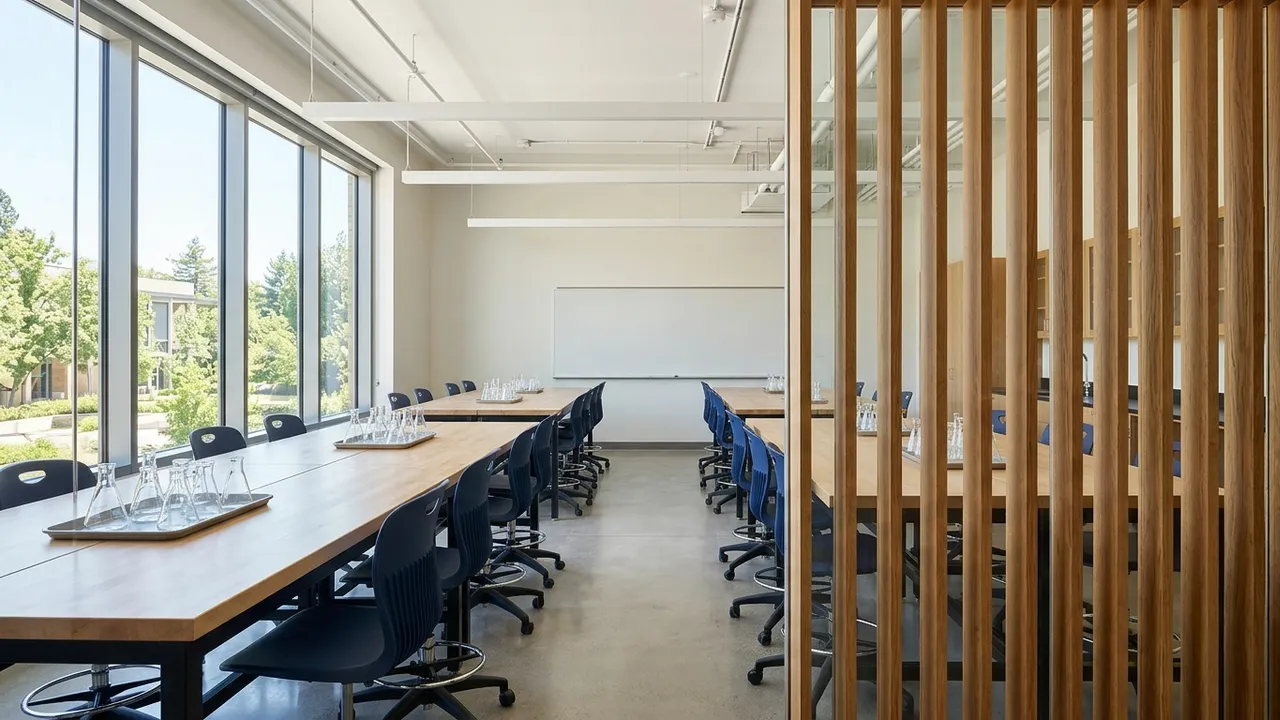
For fixed room fixtures, wet-lab benches with fume extraction, and chemical cabinets governed by Circular No. 14/2020/TT-BGDDT, the price schedule should itemize site installation, electrical safety checks, teacher training, and on-site warranty obligations across every participating school.
Checklist for School Equipment and Subject-Room E-HSMT
- Cross-check every item code against Circulars 37, 38, and 39/2021/TT-BGDDT and Circular No. 14/2020/TT-BGDDT room standards.
- Separate standard teaching kits from audiovisual IT hardware into distinct lots where appropriate to broaden competition.
- Use neutral tolerance ranges without brand locking and remove manufacturer-authorization demands on standard goods.
- Specify installation, lab utility safety checks, and teacher training deliverables inside Chapter V.
Legal Basis & Regulatory Scope
Law on Procurement No. 22/2023/QH15 as amended by Laws No. 57/2024/QH15, 90/2025/QH15, and 142/2025/QH15 (Article 37; Clause 3, Article 44); Government Decree No. 214/2025/ND-CP dated 04/08/2025 (Article 18; Clause 12, Article 26; Clause 1, Article 29); Ministry of Finance Circular No. 79/2025/TT-BTC dated 04/08/2025; Ministry of Education and Training Circulars No. 37/2021/TT-BGDDT, 38/2021/TT-BGDDT, and 39/2021/TT-BGDDT dated 30/12/2021, and Circular No. 14/2020/TT-BGDDT dated 26/05/2020 (as amended by Circular No. 14/2025/TT-BGDDT).