Key Takeaways
- Governing Scope: Article 5 of Bidding Law 22/2023/QH15; Decree 24/2024/ND-CP.
- Key Benchmark: Verify synced tax obligation flags from the Electronic Tax System separately for every consortium member.
- Execution Control: Inspect original confirmations or digitally signed tax-office verification codes during first-ranked document review.
01Regulatory Context & Core Scope
Evaluating bidder tax compliance on e-GP webforms frequently sparks disputes when an automated status flag shows unpaid balances or sync delays. Under Circular 22/2024/TT-BKHDT, applying the exact statutory definition of tax obligations and cutoff timestamps helps panels avoid improperly disqualifying compliant bidders or beneficiaries of government tax deferrals.
02Pricing Methodology & Cost Controls
Under the standard E-HSMT templates issued under Article 4 of Circular 22/2024/TT-BKHDT, including Forms 3A, 4A, 5A, and 10A, fulfilling tax obligations means paying taxes corresponding to the declared tax rates, taxable income, and taxable turnover submitted on the Electronic Tax System. Specifically, tax paid must match tax payable for the evaluation fiscal year prior to the bid submission deadline.
Because synchronization between e-GP and the Electronic Tax System can experience lag near annual filing deadlines or immediately after electronic treasury settlements, panels should not reject a bidder solely on an unrefreshed screen flag. Where discrepancies or missing links appear, the procuring entity must issue a clarification request under Decree 24/2024/ND-CP.
03Qualification Benchmarks & Bidder Preferences
During clarification or post-award document checks, compliant bidders may submit official tax-clearance certificates issued by their managing tax office, treasury payment receipts bearing transaction codes, or valid statutory deferral, extension, or exemption rulings effective on or before the bid closing time. Late tax payments settled after bid opening cannot cure a pre-closing default.
In joint ventures, every consortium member must independently satisfy the tax compliance criterion required in the E-HSMT. Preserving dated screenshots of electronic portal queries alongside authenticated tax-office confirmations inside the evaluation dossier provides a clean audit trail.
Checklist for Verifying Bidder Tax Compliance on e-GP
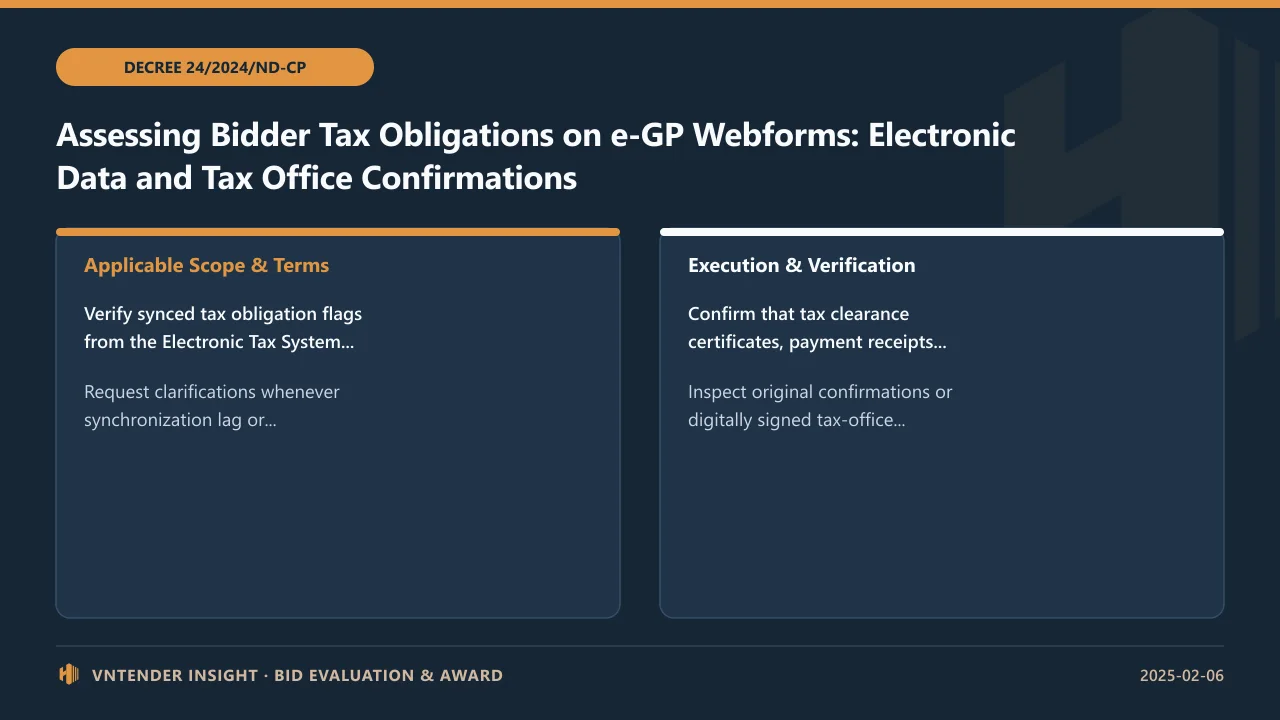
- Verify synced tax obligation flags from the Electronic Tax System separately for every consortium member.
- Request clarifications whenever synchronization lag or mismatches arise between e-GP webforms and uploaded tax notices.
- Confirm that tax clearance certificates, payment receipts, or official deferral approvals predated the bid closing timestamp.
- Inspect original confirmations or digitally signed tax-office verification codes during first-ranked document review.
Legal Basis & Regulatory Scope
Article 5 of Bidding Law 22/2023/QH15; Decree 24/2024/ND-CP; Articles 4 and 11 and standard E-HSMT forms of Circular 22/2024/TT-BKHDT.